Your Church Has the Room. We Have the Model. Let’s Talk.
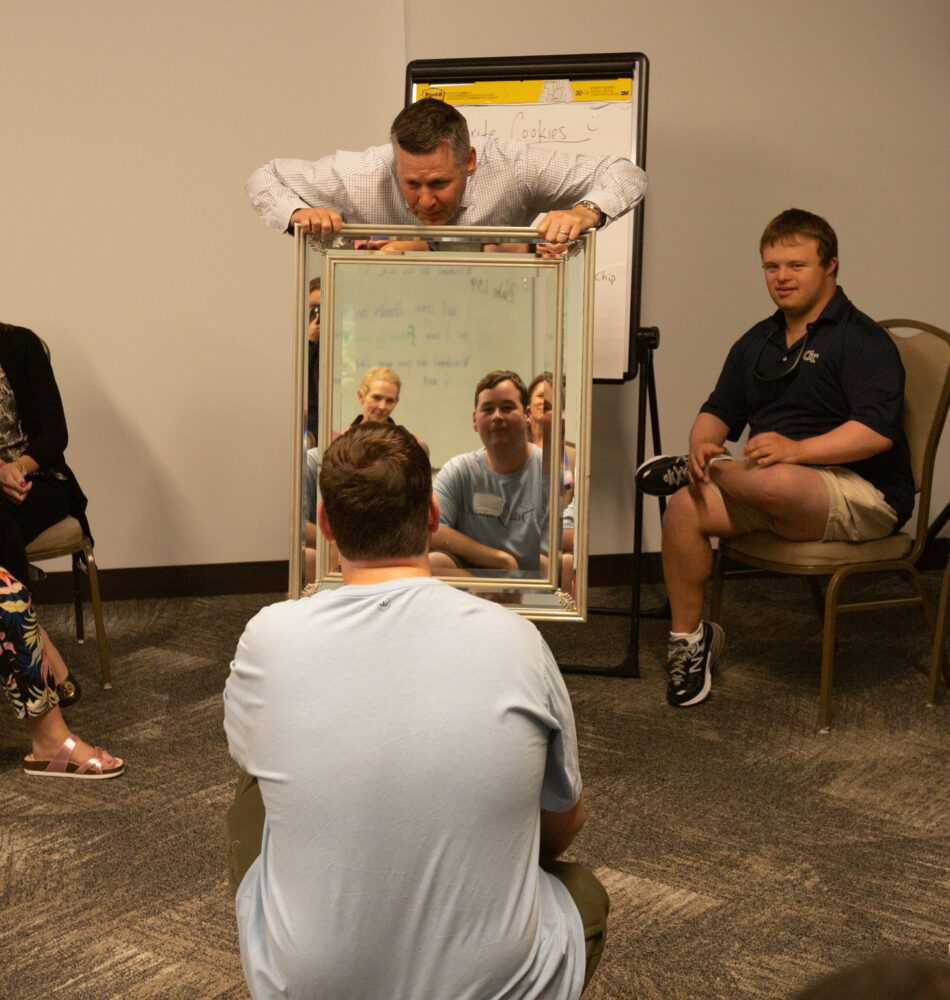
Wonderfully Made began in one kitchen in Buckhead. It was never meant to stay there. Here is what it looks like to bring this community to where you are.
Look around your church on a Sunday morning. Count the empty rooms.
Not the sanctuary — that fills up. But the fellowship hall that sits dark on Tuesday. The classroom wing that locks up after children’s programming ends. The commercial kitchen that sits unused from Monday through Saturday. Most churches in America have more space than they know what to do with during the week.
Most of them also have families in their pews carrying a weight that almost nobody is addressing: an adult child with intellectual disabilities who graduated from school, lost their peer community overnight, and has been waiting at home for the world to make room for them again.
I have watched what happens when a church decides to answer that. When Peachtree Church said yes to Kitty’s vision, they weren’t just offering square footage. They were making a theological statement about who belongs in the building and what the building is for. Kitty’s decades of faithful service to Peachtree — including her ordination as an elder — had prepared the ground for that yes. The church knew her character. They trusted her calling. And when she brought the vision, they responded.
That is the model. A person with a calling, a community that trusts them, and a building with an empty room.
“Anyone that wants to start a Wonderfully Made chapter, we would love to talk to you.”
That invitation is genuine. One of our stated commitments for the coming year is to codify everything we have learned — the program structure, volunteer training, bakery model, daily rhythm, community culture — into a replicable framework that any church with willing hearts and a room can use to build their own Wonderfully Made community.
Here is what I have learned about what it actually takes, from having built this from the inside. First, clarity of posture. Are you building community with adults who have intellectual disabilities, or creating a service for them? One centers relationship. The other centers management. Second, honest capacity. What can your community sustain with the people, space, and margin you actually have — not what you wish you had? Third, structural ownership. Who owns this? Is it a passionate volunteer’s side project, or does it live in your staff structure and budget? Without clarity here, even the most beautiful program becomes unsustainable.
Those three decisions — posture, capacity, structure — create the conditions for everything else. A monthly rhythm led by three committed families often outlasts a weekly program built on fragile goodwill. The size of the church is not the variable. The intention is.
We built this in Kitty’s kitchen. We launched with six Wonder Makers. We grew to 22 families in one year. We have coverage from CBS News Atlanta, 11 Alive, Good Day Atlanta, and Atlanta Magazine. We have a commercial bakery and an externship program and a chapter model in development. We did the hard work so you don’t have to start from scratch.
All you need is a room, a conviction, and a willingness to say yes. We’ll take it from there together.
Start a Wonderfully Made chapter
If your church or community organization is ready to open your doors to adults with intellectual disabilities, we want to partner with you. Visit wonderfullymadecommunity.org/get-involved/chapters to begin the conversation.